• Skip to primary navigation
  • Skip to main content
  • Skip to footer
Eco-Justice Connection

Eco-Justice Connection

An initiative of the North Carolina Council of Churches

Get Involved Donate
  • About
    • Mission / Goals
    • Partnerships & Collaboratives
    • History / Timeline
  • Voices
  • Initiatives
    • Faithful Advocacy
    • Climate & Energy
    • Environmental Justice
    • Local to Global
    • Climate & Health
    • Resiliency and Restoration
  • Resources
  • NCCC

Search Eco-Justice Connection

EJC Voices

EPA Takes Moral Action to Cut Carbon Pollution from Power Plants

July 14, 2015 By chris

The EPA is acting on our moral obligation to address unlimited carbon pollution coming from the nation’s power plants, the single largest source of global warming pollution in the country.

EPA Takes Moral Action to Cut Carbon Pollution from Power Plants

July 14, 2015 by chris

EPA_IPLstatement

The EPA is acting on our moral obligation to address unlimited carbon pollution coming from the nation’s power plants, the single largest source of global warming pollution in the country. Click here to let Governor Pat McCrory know that you support the EPA’s standards!

The new standards will help usher in clean energy solutions like improved efficiency and solar power: things that NC Interfaith Power & Light congregations have been using in their facilities for years to reduce emissions and save money.

Emerging wind and solar companies have been in a David and Goliath struggle against the well-funded coal and gas industries.

By requiring a 30% reduction in carbon pollution from power plants by 2030, the standards will create a dynamic move toward cleaner energy. IPL and its 40 state affiliates reaching 15,000 congregations strongly support the EPA’s important action.

The Rev. Canon Sally G. Bingham, President and Founder of Interfaith Power & Light, issued the following statement:

We applaud this landmark action that comes at a pivotal time when more people than ever have recognized the threat to their health and safety from unregulated pollution. These rules will safeguard our communities, our climate, and our children’s future.

As people of faith called to care for God’s people and Creation, especially the most vulnerable, we have a moral obligation to address the profound impacts of the way we use energy.

In addition to protecting our climate, curbing pollution from power plants offers many important benefits, including saving lives and reducing health risks to those suffering from heart disease and respiratory ailments such as asthma.

Governor McCrory needs to hear that as people of faith
we support these historic landmark safeguards.

CLICK HERE TO TAKE ACTION
to help protect the blessings of clean air and water.

Filed Under: Blog, Faith in Action Homepage Card, Slideshow Featured, Uncategorized

Duke Divinity Student Reflects On The Encyclical

June 19, 2015 By chris

“Pope Francis almost makes me want to convert to Catholicism.” This is the sentiment generally expressed by many of my colleagues at Duke Divinity School. Many of us who are not […]

Duke Divinity Student Reflects On The Encyclical

June 19, 2015 by chris


Pope Selfie“Pope Francis almost makes me want to convert to Catholicism.”
This is the sentiment generally expressed by many of my colleagues at Duke Divinity School. Many of us who are not Catholic find so refreshing a Pope that is faithfully in touch with so many social justice concerns in such a visible way. From the outset he has been a popular leader for all Christians in many ways because of his concern for the poor, the marginalized, and those without a voice (including our earth).

On June 18th, 2015 the Vatican released the Pope’s encyclical on climate change and (thankfully) I think it has gotten more hype than did the release of the last Hunger Games movie. I have seen almost daily postings from friends across the religious spectrum and non-religious friends, have seen news stories about it morning and night, and the Director of NC Interfaith Power & Light, Susannah Tuttle co-wrote an OpEd with Dr. Katharine Hayhoe, an atmospheric scientist, titled Science and religion are in accord on climate change. While Pope Francis is without question an extremely popular pope, one whose travels, actions, and words are often recorded and “shared” on social media, the interest in this particular encyclical is especially interesting, and very exciting.

At Duke Divinity, we learn about the importance of care of creation in every class. In our Bible and language courses we learn that when the Bible says that we are to “rule over” the earth, it means that we arDukeDive responsible for nourishing and caring for it, that we are stewards, not despots. In our theology and ethics courses, we learn about the reality of environmental racism, in which humanity’s role in climate change is causing environmental refugees and disproportionately harming the poorest in our world. In our history courses, we learn that for centuries Christians understood the importance of giving the land a Sabbath and living as a partof creation, rather than as destructive and shortsighted lords over and above the land. And finally, in our preaching courses, we learn about the challenge of speaking prophetically and pastorally on issues of climate change, of understanding how to bring together the urgency of environmental destruction at the hands of capitalistic greed and individualistic society with the need for Christians to develop ways of being a part of creation again, of truly caring for and protecting creation.

Pope Francis has emphasized the pressing need for action to curb climate change before, but by dedicating an encyclical to this topic, he has committed the entire Catholic Church and other religious leaders and communities to take seriously their charge to protect God’s creation.

pontifical-academies-of-sciences-and-social-sciences-quote-pope-photo-meme-350-dot-orgI am baffled by statements from many US politicians saying that they will listen to the Pope on theological matters, but not scientific ones. First, Pope Francis is a scientist—he has a Masters degree in chemistry, as has already been pointed out several times. Second, theology cannot be put in a box. At Duke Divinity we learn that theology infiltrates all of what you do and forms your worldview. We form our theology from scripture, experience, tradition, and revelation. If we actually do theology, then, we will of course find ourselves working in other disciplines to speak against injustices, because theology apart from the world and its condition and the condition of its inhabitants, is not really theology.


RELeePictureWayde Marsh is NC Council of Churches’ Duke Divinity summer intern. Wayde graduated with a degree in Politics and Religion from Washington & Lee University in Lexington, VA. In the fall, he will be entering the final year of his MDiv at Duke Divinity School. Upon completion of his MDiv, Wayde hopes to pursue doctoral work in political science—studying Middle East politics, the intersection of politics and religion, displacement politics, and US foreign Policy in the Middle East. He attends Watts Street Baptist Church in Durham.

Filed Under: Blog, Uncategorized

Vatican Call to Action

June 18, 2015 By chris

The Vatican has officially released the Papal encyclical on the environment: “Praised Be: On the Care of Our Common Home” (Laudato Si’).

Vatican Call to Action

June 18, 2015 by chris

“Praised Be: On the Care of Our Common Home” (Laudato Si’).  View the english text of encyclical here.

A Papal encyclical is a letter sent by the Pope to the bishops of the world and to the entire Catholic population across the globe.  Additional, Pope Francis is addressing a wider audience.  During his weekly blessings in St. Peter’s Square this past Sunday, Pope Francis said, “This encyclical is aimed at everyone:  Let us pray everyone can receive its message and grow in responsibility toward the common home that God has given us.”

This is the first encyclical in the history of the Vatican to address environmental concerns.  Pope Francis has declared climate change and environmental protection as related moral, social, and ecological issues. The encyclical is bringing much needed global attention and focus to these issues, and aims to serve as a motivating force for the over one billion Catholics of the world and many other people of spiritual and environmental conviction.

This is a deeply spiritual document that needs to be fully received holistically to fully embrace its significance.  We wish to deeply honor and respond in ways that are respectful to this process.  When the Pope is visiting the U.S. in September, NCIPL will be working with Catholic congregations in NC to help hold meetings on the encyclical and how we can put our “faith into action” across through collaboration across the state.

Please contact info@ncipl.org if you would like to participate in the planning of local events in your area!

Many Faiths

Filed Under: Blog, Faith in Action Homepage Card, Making a Difference Sidebar, Slideshow Featured

Solar Benefits – LTE in News & Observer – June 6, 2015

June 10, 2015 By chris

Gary Smith is a member of Community United Church of Christ, Raleigh and serves as Chair of NCIPL’s Energy Working Group. Read the LTE on News&Observer Online here.

Solar Benefits – LTE in News & Observer – June 6, 2015

June 10, 2015 by chris

GSmith_N&O_LTE_6.6.15

Gary Smith is a member of Community United Church of Christ, Raleigh and serves as Chair of NCIPL’s Energy Working Group.
PNG logo_transparent background
Read the LTE on News&Observer Online here.

Filed Under: Blog

Good Shepherd Episcopal Church in Hayesville, NC wins national award for work at nexus of climate and poverty

April 24, 2015 By nancy

Energy saving volunteers in North Carolina work at nexus of climate and poverty Community Inspiration Winner of IPL’s Cool Congregations Challenge Good Shepherd Episcopal Church Hayesville, North Carolina CO2 Reduction: […]

Good Shepherd Episcopal Church in Hayesville, NC wins national award for work at nexus of climate and poverty

April 24, 2015

Energy saving volunteers in North Carolina work at nexus of climate and poverty

Community Inspiration Winner of IPL’s Cool Congregations Challenge

Good Shepherd Episcopal Church
Hayesville, North Carolina

CO2 Reduction: 33 metric tons/year
Prevents: 35,000 lbs. of coal from being burned
Families helped: 40 and counting
Percent CO2 Reduction: 10-20% per household

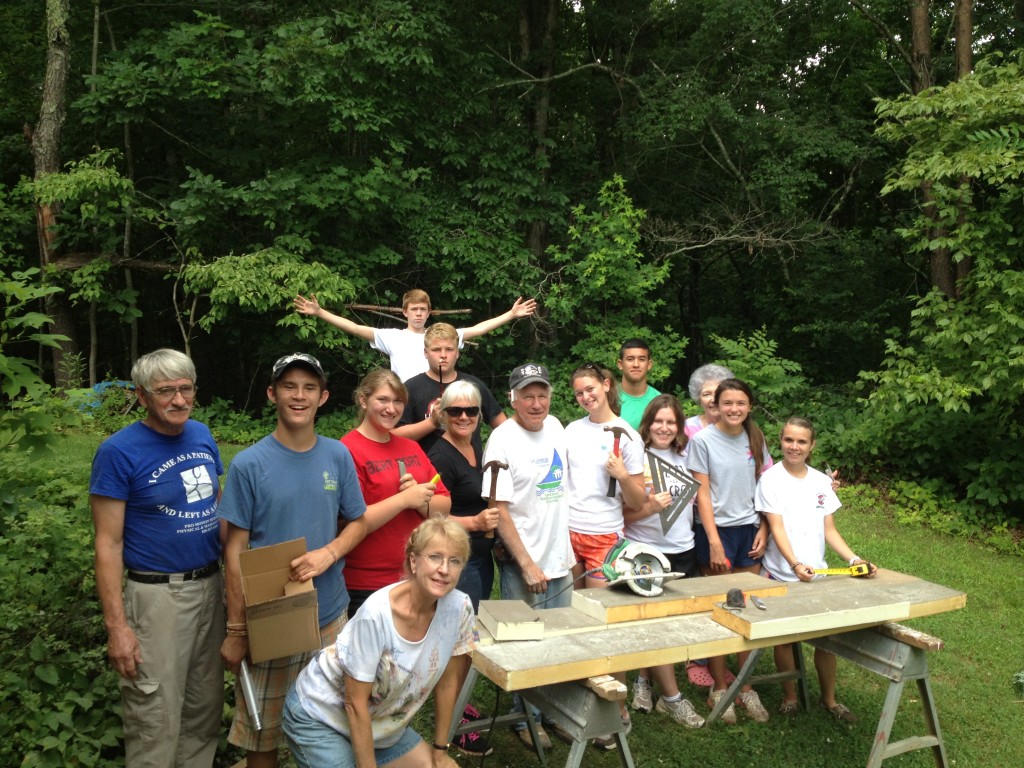
Good Shepherd Episcopal HayesvilleA group of around ten climate concerned volunteers from Good Shepherd Episcopal Church and the Hayesville community are answering a combined moral calling to help the poor and be good stewards of Creation. Working with local poverty and charity organizations, they have helped 40 disadvantaged families reduce their carbon footprint and save money on energy bills. After a referral is identified, the volunteer team performs a free energy assessment, identifies sources of free or low cost materials, locates sources of funding, and then provides free labor to get the job done. Upgrades include such things as LED lighting, weather stripping, insulation, and replacing inefficient heating and cooling systems. Some of the work is done in conjunction with the Hinton Center which operates a retreat / mission center in the local community and which brings in mission teams from all over the country as part of their work. Good Shepherd will be integrating its efforts with the Hinton Center so that a side benefit will be that volunteers from Hinton will learn some exposure to the energy saving approaches and ideas.

 While this effort is sponsored by Good Shepherd, volunteers of all faiths and religious backgrounds are welcomed to assist in helping our neighbors become more financially independent and reduce the financial stress of occasional extremely high energy bills.  The volunteers at Good Shepherd are also available to help congregations in other areas create an Energy Saving Volunteers effort in your local congregation or community.
For more information contact the church office at 838-389-3397, or email Brad Rouse at brouse_invest@yahoo.com or Amy Nicolson at amyandgil@hotmail.com .

Filed Under: Blog, Education, Energy Efficiency, Energy Pages, In the News, Making a Difference Sidebar, Success Stories

The Pope and Ecology: Shouts from the Highest Steeple

April 16, 2015 By reuben

This post is from our friend Dave Grace, a dual degree masters candidate with Duke University’s Nicholas School of the Environment and Divinity School and creator of the Youth Faith Conservation Network, which will […]

The Pope and Ecology: Shouts from the Highest Steeple

April 16, 2015 by reuben

Dave Grace School of the Environment  Duke UniversityThis post is from our friend Dave Grace, a dual degree masters candidate with Duke University’s Nicholas School of the Environment and Divinity School and creator of the Youth Faith Conservation Network, which will be leading a biodiesel bus tour of Raleigh faith communities April 25th. This blog was originally posted at the Nicolas School’s website.


The excitement is building: for the first time in history, the Pope is issuing an encyclical on the environment… but wait, why is this important?

Pope_Francis

Two details:

1. The Pope presides over the largest religious body with a single human head: Catholicism. He is influential.

2. The encyclical is the second most important document the Pope can issue and is the first of its kind to address environmental issues. The letter is a significant event.

However, influence + significant event has an uncertain outcome.

My Twitter companions @CatholicEcology @CatholicClimate and @CathClimateMvmt are certainly counting down the days till its issue and are responding to Pope Francis’ prayer intention for this month, intending “that people may learn to respect creation and care for it as a gift of God” which supports the push to recognize April as Care for Creation Month (here).

The speculation is that the encyclical will be issued this summer.

This Wednesday (April 8th) some of my intellectual elders, Mary Evelyn Tucker and John Grimm, who convene Yale University’s Joint-Degree in (and an associated forum of) Religion and Ecology will be holding a panel to explore the relevance of this encyclical.

Watch their overview of the importance of this encyclical here where John Grimm calls the encyclical a “game changer” and points toward its effect on behavior change.

This panel is titled:
“Pope Francis and the Environment: Why His New Climate Encyclical Matters”

In the overview video here, Mary Evelyn Tucker suggests that this encyclical will impact scientists and policy makers as well as people of faith. As one who is currently pursuing degrees in Duke’s Divinity School and Nicholas School of the Environment, and who has been influenced by the work of Mary Evelyn Tucker and John Grimm, I certainly appreciate the Pope’s focus on ecology/environment/climate and agree that a ethical/moral vision must run parallel to scientific understanding. Indeed, I believe science should be both informed and guided by such a vision.

It turns out that science has always been a product of a time and place and certain people’s interactions therein. This finding has nulled the absolute objectivity of science and the scientist. In many ways this finding has already permeated throughout the university system. However, I attest that the ramifications of fully appreciating the integration of subjective and objective viewpoints within historically-flavored, institutionally-structured worldviews is complex. Further, the epistemological consequences of this finding are inconvenient for a disciplined world.

This finding has led the university to a sluggish need to acknowledge, and be conversant with, what has previously been happily located within the domains of other disciplines. This is a huge endeavor given, for instance, the present gulf between humanities and science classrooms. While this gulf may have been bridged conceptually in many academic settings, it is more difficult to bridge this gap and build collaborations in practice.

The inconvenience and uncertainty in collaborative and interdisciplinary practice is manifest in our environmental predicament which continually proves to be all but environmental. This gulf has been associated with an institutionally-embedded immaterial/material split that creates artificially separate spheres relegated to religion and science respectively. This general problem has been treated in different ways– historical, philosophical, etc. The split is characterized as a problem in that religion is rendered impotent and science amoral. Or generally in that thought has lost its referent in action and action has voided thought. However, without delving into the literature, it is apparent that religious leaders are often ill-equipped to communicate science or garner action and scientists are often ill-equipped to communicate values or to understand the social and cultural ramifications of their work.

Ecology is making amends. Theology is making amends.

Into this gulf, the Pope’s encyclical will be delivered.

francis-garden

And this is timely work given the framing of international policy with the upcoming UN Climate Change Conference.

The Pontifical Pundit should indeed now step into the bully pulpit to sound an alarm on the pressing sustainability issues we face and perhaps by doing so we can more fully come to terms with the interrelation of social, economic, ecological issues.

Perhaps systemic oppressions and other structural dysfunctions will come to the fore over the minutia we often concern ourselves with. Perhaps we can begin to feel vulnerable enough to admit the limits of our knowledge and knowledge itself for addressing a problem which is as fully human as we are or fail to be.

A promising update comes from a March 30, 2015 international meeting of 17 Anglican Bishops who issued a declaratory report, titled “The World Is Our Host: A Call to Urgent Action for Climate Justice.” Interfaith Power and Light recaps what I see as the promising aspect here, being a call to specific action as informed by their faith and larger ethical commitments:

“The Declaration commits the bishops to specific first actions including: energy conservation measures in church buildings; more renewable energy; nurturing biodiversity on church land; supporting sustainability in water, food, agriculture and land use reviewing churches’ investment practices including a call for divestment; and closer ecumenical and interfaith co-operation” (read more here).

I will certainly be listening to what the Pope has to say. Will there be a response in Paris?

Filed Under: Blog, Faith Resources, Making a Difference Sidebar Tagged With: Climate Change, Encyclical, Pope Francis

  • « Go to Previous Page
  • Page 1
  • Interim pages omitted …
  • Page 17
  • Page 18
  • Page 19
  • Page 20
  • Page 21
  • Interim pages omitted …
  • Page 37
  • Go to Next Page »

Footer

Contact

Eco-Justice Connection
27 Horne St.
Raleigh, NC 27607
(919) 828-6501
info@ncchurches.org

Subscribe

Click here to subscribe to newsletters and blog updates.

  • Facebook
  • Instagram
  • Twitter

Copyright © 2022 Eco-Justice Connection · All Rights Reserved · Website by Tomatillo Design