• Skip to primary navigation
  • Skip to main content
  • Skip to footer
Eco-Justice Connection

Eco-Justice Connection

An initiative of the North Carolina Council of Churches

Get Involved Donate
  • About
    • Mission / Goals
    • Partnerships & Collaboratives
    • History / Timeline
  • Voices
  • Initiatives
    • Faithful Advocacy
    • Climate & Energy
    • Environmental Justice
    • Local to Global
    • Climate & Health
    • Resiliency and Restoration
  • Resources
  • NCCC

Search Eco-Justice Connection

EJC Voices

Endorse NCIPL Resolution to Duke Energy

December 8, 2020 By chris

This fall, NCIPL leaders drafted a Resolution to Duke Energy asking that they set a carbon dioxide emissions reduction goal for the year 2030. Setting this reduction goal in this time frame is essential to […]

Endorse NCIPL Resolution to Duke Energy

December 8, 2020 by chris

This fall, NCIPL leaders drafted a Resolution to Duke Energy asking that they set a carbon dioxide emissions reduction goal for the year 2030. Setting this reduction goal in this time frame is essential to alleviating and preventing the worst impacts of global climate change, and is the recommendation of the Intergovernmental Panel on Climate Change (IPCC).

As people of faith and conscience, we know that we must reduce emissions now in order to care for this planet and each other. We are therefore calling on corporate leaders and communities, like Duke Energy, to make the necessary emissions reductions for the good of our world. Join us. Please endorse our resolution here. 
Filed Under: Blog

Justice, Equity, Diversity, and Inclusion Statement

November 12, 2020 By chris

NC Interfaith Power & Light (NCIPL) is actively working to become an anti-racist program of the NC Council of Churches. We believe that relationships must be centered in justice and […]

Justice, Equity, Diversity, and Inclusion Statement

November 12, 2020 by chris

NC Interfaith Power & Light (NCIPL) is actively working to become an anti-racist program of the NC Council of Churches. We believe that relationships must be centered in justice and equity within the human family, as well as with all of the natural world. We must strive together toward this sacred goal.

We bear this responsibility with integrity, incorporating into all our campaigns that we do what is right, even when the path is not obvious or easy. As advocates for climate justice, we commit to working against systemic racism and anti-Blackness; ending both the historic disenfranchisement of Black, Indigenous, and People of Color, and racially-rooted economic and health disparities; and dismantling structures of racial and economic marginalization and colonialism.

Our diverse religious and spiritual traditions call us to work for systemic change and a more just society that embraces differences based on religion, national origin, gender, sexual orientation, gender identity, age, and physical ability. NCIPL will address this with specific, often-updated commitments regarding internal processes, policy positions, diversity efforts, training, funding mechanisms, and more.

Together we will work to reverse paradigms of oppression of humans and the natural world as we build a thriving, inclusive, and equitable future on behalf of all who inhabit this good Earth.

We commit to providing practical resources, that can be shared across faiths, directly relating how faith can, and should, affect climate and environmental justice action, and how to build a culture that is both spiritually and physically resilient, so that even as the Earth changes, communities of faith are able to thrive and help others.

Filed Under: Uncategorized

Getting Real About Poverty and the Environment

September 8, 2020 By chris

By Kathy Whitaker Knight So first, let’s get literal with this … environment is synonymous with surroundings, location, atmosphere, situation. Poverty is synonymous with shortage, deficiency, scarcity, and lack. What […]

Getting Real About Poverty and the Environment

September 8, 2020 by chris

By Kathy Whitaker Knight

So first, let’s get literal with this … environment is synonymous with surroundings, location, atmosphere, situation. Poverty is synonymous with shortage, deficiency, scarcity, and lack.

What needs to be understood is that poverty creates its own priorities. Those who would damage the environment are clear about those concepts. That’s why they choose poor communities to bring the destruction to. The community of people who wish to protect the environment need to understand those realities as well.

The thing is, it goes back to the haves and the have nots. What would make one think about air quality in the face of homelessness? Is it relevant to one who has no way to heat water, that the forest is being destroyed? If you live with the fact you must keep a household going with $512.00 per month, can you afford the luxury of recycling newspaper in the way that environmentalists would? No, because maybe you’d use the newspaper you picked up from the parking lot to put in the cracks around your window sill. Is it possible that the glass jars environmentalists would have you put in a recycling bin are use to drink from?

Many issues around maintaining optimum health are affected by poverty. Mold is damaging to some people, has a negative impact on respiratory function of many. Buildings in areas with high moisture often have conditions that are perfect for developing mold. Has anyone paid attention to where and how low income housing is built? Mobile homes generally have carpet throughout with the exception of kitchens and bathrooms. Dust mites thrive in carpet and underneath the carpet in a mobile home is often a surface that can’t be used without some type of covering. What if your child is diagnosed with allergies to mold and dust mites? Imagine having to pay for allergy medications without health insurance. How many working poor families don’t have health insurance? Remember that single adults don’t get Medicaid in NC. That, my friends, is a situation.

Mobile homes are usually hardest hit by any natural disaster; let your mind return to the footage from newscasts after a tornado or hurricane. Have environmentalists looked at who mobile homes are marketed to and when? Mobile home companies tie their marketing to tax returns in poor communities – some even help folks file their taxes! Same with the timing of the lottery. Is it coincidental that the sales began during the time that many poor folk are getting tax refunds and feeling like they may actually catch up with the bills? News reports today indicate that the highest sales for lottery tickets are in poor counties. Surprised? Poverty is big business in these United States!! Always has been.

You can’t talk about the environment without looking at who owns the land. Who is in a position to negotiate with corporate entities looking to move in a landfill or intensive livestock operation? Perhaps the energy needs to be redirected – is the environmental activist community ready to look at and deal with the wealthy community? Work is done to organize poor communities to fight for the environment. Hey, poor folk deal with their environment 24/7. Have to – it’s not a multiple choice thing. So maybe go to those who can afford to take a couple of days off to attend a conference. Teach them about the environment. Teach them to provide scholarships, child care stipends, transportation reimbursements or better yet UP FRONT money to travel with. Learn that it’s not always apathy, it’s often that poor folk have different priorities, plan differently.

When you plan an event, do you think of what part of the month it is to take place? When do most folk get paid? Who’s the largest employer in the area you’re working? You should know when they get paid. Do you know when state employees get paid? Do you know when SSI, TANF, SSDI checks arrive? Then there’s the issue of location. Are you asking people to come to a location that may be uncomfortable to a person with minimal funds? Please know that everyone doesn’t have money to use for meals outside of the home, taking people to a place where a deli sandwich costs $6.95 is NOT a good plan.

Setting includes food, seating, and even temperature of the rooms. Take a little time to learn about people living with poverty. You may find that they like hearty food, don’t feel the need to count calories and carbs at every meal. If there’s time, how about sending out a proposed menu and asking for feedback. Country folk don’t usually want to sit still and be “talked at” for long periods of time; that’s easier for academics, but that’s not who you’re trying to organize is it? Do you throw around acronyms at the table without making sure everyone knows what they mean? This may sound trivial to some, but cultural competence is more than having a “friend” of another race.

Know that the environment is important, but understand the situation includes consideration of the lack of funds as well as the shortage of time off. There’s often a poor quality of communication when it comes to poverty and the environment. It will take people from all walks of life to get the work done; we’ve got to act like we know that. I’d love to hear thoughts from others on this.


Kathy Whitaker Knight wrote this article in 2006 in her role as the Director of the Area Wide Health Committee, a program of Concerned Citizens of Tillery. CCT is a grassroots organization with a history of working for positive change for over thirty-five years. The organization works for environmental justice, land loss prevention, accessible quality health care and effective community education along with many other issues.

Kathy joined the NCIPL team in the summer of 2020 as a Faith Energy Champion program partner with The Roanoke Center and Roanoke Electric Cooperative (REC). She is a REC member-owner and lives in Tillery located in Northeastern North Carolina. Kathy received a BSW from East Carolina University (graduated at age 40). Kathy spent a very rewarding 25 years working with MH/SA/ID populations, DV/SA survivors, Breast Cancer survivors, PLWHA and their families. She is currently in her second year of working as a 2020 Census Field Supervisor. Kathy is married with a big blended family of 6 children and 9 grandchildren and has a couple of lively German Shepherds, running the yard.

Contact Kathy: kknight@roanokecenter.org 

Filed Under: Uncategorized

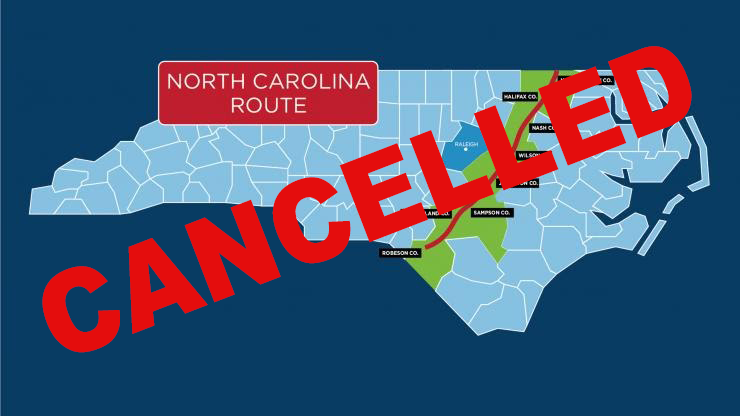
A Win for the People and Planet: Atlantic Coast Pipeline Cancelled!

July 7, 2020 By chris

  We prayed and we organized.  We amplified the voices of directly impacted communities and we met with elected officials and high-level decision-makers.  We held press conferences and wrote letters. […]

A Win for the People and Planet: Atlantic Coast Pipeline Cancelled!

July 7, 2020 by chris


We prayed and we organized.  We amplified the voices of directly impacted communities and we met with elected officials and high-level decision-makers.  We held press conferences and wrote letters. We widely distributed our Governing Board’s published statement condemning the construction of pipelines such as the Atlantic Coast Pipeline.

And It Worked!

The announcement of the cancellation of the toxic $8 billion, 600-mile Atlantic Coast Pipeline is a victory beyond measure. It is a win for the people, a win for the planet, a win for the entirety of God’s Creation. Entrusted with the stewardship of this creation (Genesis 1:28-30), we can do no other than continue making decisions that keep each other and our planet healthy.

It is now time for Duke Energy to enact the values of their 2020 Climate Report by investing in renewable energy, battery storage, energy efficiency programs, and grid projects in order to fully commit to achieving a net zero carbon future.

Now is also a time of great opportunity for North Carolina. The 2020 Risk Assessment and Resilience Plan is the state’s most comprehensive effort to date, based on science and stakeholder input, to address North Carolina’s vulnerability to climate change.

The N.C. Council of Churches has a long history of standing in the breach for the environment, predating even the landmark Clean Water and Clean Air Acts. As the Creation Care program of the Council, NC Interfaith Power and Light’s education and advocacy campaigns encourage clergy and members of congregations to be aware and be able to articulate the moral dimensions of climate change and environmental justice issues. 

As part of a letter delivered to Governor Roy Cooper, Department of Energy Quality Secretary Michael Regan, and N.C. policy staff in opposition to the Atlantic Coast Pipeline, the Rev. Dr. Jennifer Copeland – Executive Director of the NC Council of Churches stated:

We start with the believers, the believers in climate change, the believers in renewable energy, the believers in environmental justice, the believers in responsible regulation. We work with these people to help us advocate with and educate on behalf of the others.

As people of faith and in my case, the Christian faith, we have a God-given responsibility to care for creation. It is the single greatest gift of the creator to the creatures. Without it, we don’t exist. Without respecting and maintaining the precarious and tender balance that allows life on this planet, we won’t survive. 

Shutting down an enormous project like the Atlantic Coast Pipeline proves how strong our legal system and democracy can be, especially when people of faith call on these systems from a moral imperative. 

All the struggles and opportunities of 2020 – “a year of perfect vision” – are providing clarity on how we see the world, what we need to focus on, and how critical organizing our communities is in protecting the people and places that we love.

This is our time to win!


Susannah Tuttle –  NCIPL Director · July 7, 2020

Filed Under: Uncategorized

Articles on Racial Justice and Climate Change

June 10, 2020 By chris

****** We believe we cannot address climate change without also addressing racial injustice. To learn more about their intersection and why addressing both is needed read:   I’m a Black […]

Articles on Racial Justice and Climate Change

June 10, 2020 by chris

******

We believe we cannot address climate change without also addressing racial injustice.

To learn more about their intersection and why addressing both is needed read:


I’m a Black Climate Expert. Racism Derails Our Efforts to Save the Planet
 | Ayana Elizabeth Johnson | The Washington Post

Racism, Police Violence, and the Climate Are Not Separate Issues
| By Bill McKibben |
The New Yorker

Black Environmentalists Talk About Climate and Anti-Racism
| By Somini Sengupta |
The New York Times

Why Every Environmentalist Should Be Anti-Racist
| By Leah Thomas |
Vogue

Why Racial Justice is Climate Justice
| By Claire Elise Thompson |
Grist

Tear Gas and Coronavirus are ‘a Recipe for Disaster,’ Experts Warn
| By Shannon Osaka |
Grist


Filed Under: Blog, Uncategorized

Response to Systemic Racism

June 4, 2020 By chris

Featured image from Jamar Lanham at a protest in Raleigh, NC during the weekend of May 30-31, 2020. #Lanhamphotography Posted on June 3, 2020 NCIPL envisions a stable climate where […]

Response to Systemic Racism

June 4, 2020 by chris

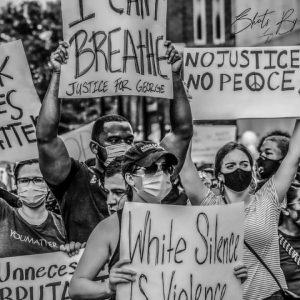
Featured image from Jamar Lanham at a protest in Raleigh, NC during the weekend of May 30-31, 2020. #Lanhamphotography

Posted on June 3, 2020

NCIPL envisions a stable climate where humans live in right and just relationships, interconnected with a healthy, thriving, natural world. NCIPL accomplishes its mission by encouraging a culture shift towards environmental justice and creation care, while underscoring the importance of climate action for people of faith and conscience as a moral imperative.

NCIPL has adopted the US Climate Action Network’s JEDI: Justice, Equity, Diversity, Inclusion Statement as our guiding values. In order to live into this vision, we must talk about, and unlearn, the sin of racism. That means dedicating ourselves to environmental justice and therefore racial justice. It also means speaking honestly and openly about our current moment. 

Fighting structural racism is – and must be – integral to NCIPL’s climate justice mission. As we mourn, listen, learn, and mobilize we will be redoubling our efforts to fight for equality.

We at NCIPL are fully committed to making that happen, and the first step is for us all to state unequivocally that Black Lives Matter.

As the Creation Care program of the NC Council of Churches, we are also sharing with you our Governing Board Statement and press release below.

In prayer and action,

Susannah Tuttle, M.Div
NCIPL Director

Sarah Ogletree, M.Div
NCIPL Program Coordinator


Statement from the North Carolina Council of Churches

A resolution adopted by the Governing Board of the North Carolina Council of Churches, June 2, 2020.

Whereas the North Carolina Council of Churches was founded in 1935, primarily for the purpose of addressing racial inequity and racial injustice, and 

Whereas our white founders soon recognized that racial equity and racial justice should not be discussed without including racially/ethnically diverse voices and so included black faith leaders from North Carolina as members of the Council by 1943, and 

Whereas we have striven together in these eight decades to support the Civil Rights Act, support the Voting Rights Act, lament the deaths of untold black neighbors whose names are written on the heart of God and on the hearts of those who loved them, call for justice when the systems of justice failed us, and hold firm to the belief that our diversity makes us stronger, and

Whereas the murder of George Floyd by a white police officer while three other white officers watched has exacerbated an already unacceptable devaluing of black and brown lives, and

Whereas racism has been compared to a complex underground rhizome that spreads unseen before erupting into specific social structures (e.g., law enforcement), concentrating attention on this part of the structure while the main tumor continues to strengthen racism in the remainder of the system, and 

Whereas we recognize and confess that the racist systems in which we live primarily benefit white people, we therefore place a higher expectation on white people to do the necessary work of dismantling these systems;

The Governing Board of the North Carolina Council of Churches hereby resolves to press ahead with urgency to understand the dynamics of racism in all of its manifestations and to be transformative in society by working across systems and structures where interpersonal, systemic and institutional racism operate, and to work to dismantle the racist systems that perpetuate and allow violence against black and brown bodies. 

We will immediately and actively:

  1. Bear witness to the Gospel that proclaims each of us are beloved of God; 
  2. Educate people, particularly white people, about the underlying structures of systemic racism, especially educational, health care, judicial, economic, religious, and governmental systems;
  3. Teach the truth that white privilege benefits white people in ways that must be acknowledged by them; 
  4. Empower white people to move beyond passive support to become active allies of black and brown people;
  5. Denounce the increased militarization of our local police forces and call for accountability such as: ban chokeholds and strangleholds, implement use-of-force continuums, institute de-escalation training, establish diversity and inclusion training, and require comprehensive community reporting;
  6. Confess that white supremacy infects the very systems that are meant to ensure “liberty and justice for all”; 
  7. Disrupt the current systems by refusing to accept indifference (“It’s not my problem”), claims of innocence (“I’m not a racist”), disavowal of responsibility (“I don’t see color”), minimizing the issue (“All lives matter”), or willful helplessness (“There’s nothing I can do”); and
  8. Create systems that tangibly make rapartions for the damage of over 400 years of slavery and oppression by standing in solidarity with and amplifying the voices of black and brown people who have experienced suffering, pain and violence as a result of the current systems. 

—

Founded in 1935, the North Carolina Council of Churches enables denominations, congregations, and people of faith to impact our state on issues such as racial equity, farmworker rights, environment, LGBTQ+ rights, economic justice and development, human well-being, equality, compassion and peace, following the example and mission of Jesus Christ. The Council comprises 26 distinct judicatories from 18 denominations. Across the state, our members have over 6,200 congregations with about 1.5 million congregants. For more information about the Council’s 85-year history, visit www.ncchurches.org. To stay up to date on progressive, faith-based news, follow us on Facebook and Twitter. 


Filed Under: Blog, The Heart of Our Work

  • « Go to Previous Page
  • Page 1
  • Interim pages omitted …
  • Page 4
  • Page 5
  • Page 6
  • Page 7
  • Page 8
  • Interim pages omitted …
  • Page 37
  • Go to Next Page »

Footer

Contact

Eco-Justice Connection
27 Horne St.
Raleigh, NC 27607
(919) 828-6501
info@ncchurches.org

Subscribe

Click here to subscribe to newsletters and blog updates.

  • Facebook
  • Instagram
  • Twitter

Copyright © 2022 Eco-Justice Connection · All Rights Reserved · Website by Tomatillo Design