
• Skip to primary navigation
  • Skip to main content
  • Skip to footer
Eco-Justice Connection

Eco-Justice Connection

An initiative of the North Carolina Council of Churches

Get Involved Donate
  • About
    • Mission / Goals
    • Partnerships & Collaboratives
    • History / Timeline
  • Voices
  • Initiatives
    • Faithful Advocacy
    • Climate & Energy
    • Environmental Justice
    • Local to Global
    • Climate & Health
    • Resiliency and Restoration
  • Resources
  • NCCC

Search Eco-Justice Connection

EJC Voices

Speak out against anti-climate executive order

March 28, 2017 By chris

This week, Donald Trump issued an executive order to turn back the clock on the climate progress we have made over the past decade. Tell him you oppose his actions!

Speak out against anti-climate executive order

March 28, 2017 by chris

This week, Donald Trump issued an executive order to turn back the clock on the climate progress we have made over the past decade. In addition to directing the EPA to dismantle the Clean Power Plan, this sweeping executive order also attempts to undo methane standards for oil and gas operations, stop federal agencies from considering the impact of climate change in their decisions, and open up federal lands for coal mining. Tell him you oppose his actions.

The issues and impacts of climate change go to the heart of our spiritual values and our call to serve the poor, protect life, and to be good stewards of creation.

Refusing to act on climate and rolling back important protections for our air quality is not only foolhardy, it will cost lives. The Clean Power Plan is estimated to prevent nearly 3,000 premature deaths from respiratory problems, heart disease, and other pollution-related illnesses.

The Clean Power Plan has important provisions to incentivize renewable energy and energy efficiency projects in lower income neighborhoods. It will help bring the benefits of clean energy, like good jobs and lower energy bills, to consumers in those communities. But Trump and EPA Administrator Scott Pruitt want to unravel this carefully crafted plan that had the input of millions of Americans through the public comment process. It’s not going to be as easy as they think.

Over the past decade, we’ve made important progress: EPA actions have helped curb pollution from power plants, mileage standards are making our cars more fuel efficient, and we have supported climate vulnerable nations to adapt with our contributions to the Green Climate Fund. We have much more to do, and we should be building on our progress, not reversing it.

Tell President Trump: we will not go backward.

We will resist these attempted rollbacks every step of the way. Our faith communities will continue to lead. We will use energy efficiently, install renewable energy on our facilities, and build climate resilient communities. We will support those most in need and those who bear the brunt of climate impacts.

We pray that our government will join us.
 

Filed Under: Blog

Community United Church of Christ – A Cool Congregation 2016 Winner!

February 28, 2017 By chris

Community United Church of Christ in Raleigh is one of three Cool Congregation 2016 winners! The Cool Congregations program, through national Interfaith Power & Light, is designed to support faith […]

Community United Church of Christ – A Cool Congregation 2016 Winner!

February 28, 2017 by chris

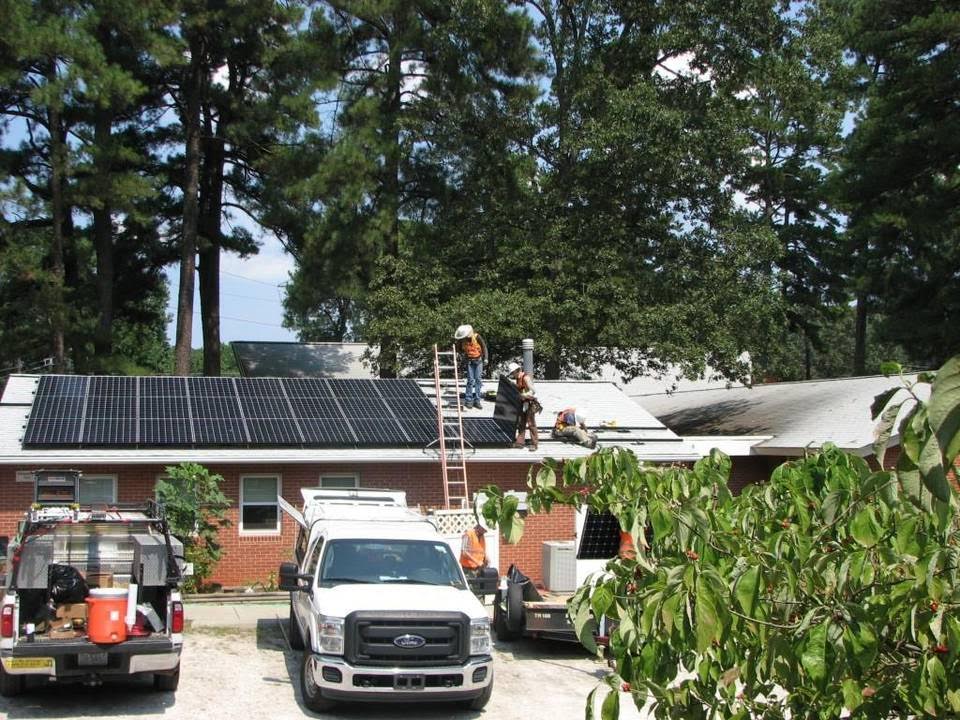
Community United Church of Christ in Raleigh is one of three Cool Congregation 2016 winners! The Cool Congregations program, through national Interfaith Power & Light, is designed to support faith communities as they “walk the talk” by reducing their own carbon footprint, thus helping to cool the planet.


Community United Church of Christ (CUCC) took to heart the mission of making the world a better place. They did this in two ways:

  • Installing solar panels to reduce the church’s own carbon footprint and
  • Helping those in their community most impacted by climate change to weatherize their homes.

The results were impressive– the church was able to reduce its CO2 by 7 tons per year and the weatherized homes saved energy (6 tons of CO2 reduction), and benefited from lower energy bills and more comfortable homes.

As CUCC started thinking about this project they recognized that the biggest impact of a changing climate would be on the poor because they would not be able to adapt as readily as the affluent. As people of faith, this challenged them to address climate change and to ensure that the poor would not be left behind. The project was led and organized by the Justice in a Changing Climate Task Force (JCC) that was formed to explore and recommend solutions to mitigate the negative effects on nature and humanity from an atmosphere overheated by excessive fossil fuel consumption.

Home Weatherization

The task force invited 15 other congregations to participate in the weatherization program. To date 21 homes have been weatherized through the program by volunteers from the congregations. In addition to decreasing energy use and increasing home comfort, the program brings together and motivates volunteers from local congregations.

Solar Array

In addition to helping those in need in their community, the church wanted to reduce its own carbon foot print and decided to install a solar array to generate electricity from the sun and lower electricity costs. The congregation was in favor, but stipulated that the system could not be paid for from the church’s general fund. All the money was raised from a capital campaign with gifts from both congregational members and from people outside the church. The campaign was so successful that there was enough money to install the solar array and award seed grants to four other non-profit organizations to initiate their own solar projects. CUCC’s solar array was completed and went online in November 2015 and the church’s main building now receives half of its electricity from solar panels on its roof. One thousand dollars a year in energy bill savings is now being directed into church missions and the church building is setting a positive example for other congregations and nonprofits inspired to initiate their own solar projects.

Since its inception in 2007, the JCC, through its outstanding leadership, has inspired churches from other denominations and individuals to join the efforts to provide the poor with some relief from the real and potential devastation of climate change and championed the vision for a healthier stewardship of God’s creation.

To read about the other two winners visit the announcement link here!

Filed Under: Blog

Sol Train Connects Climate and Faith with Solar Power

February 23, 2017 By chris

Many people want to take meaningful action on climate change, but don’t know where to start. Taking a big step, like switching to solar, doesn’t have to be hard. Any […]

Sol Train Connects Climate and Faith with Solar Power

February 23, 2017 by chris

Many people want to take meaningful action on climate change, but don’t know where to start. Taking a big step, like switching to solar, doesn’t have to be hard. Any change is easier when you

have a guide to point you the right way and when your community is on the same journey.

NC Congregations are hosting events from Winston-Salem to Wilmington to help individuals and communities find out if solar is right for you. NCIPL has partnered with two mission-driven, locally-owned solar installation companies and at each event stop our solar experts will help you learn everything you need to know about solar and answer all of your questions.

This is what the Sol Train is all about. Our team of climate change advocates, energy specialists, and solar installers are working together to make solar simple. And when you spread the word, our impact on climate change grows.

NCIPL Director Susannah Tuttle says, “We can no longer be complacent about the dangers that come with burning fossil fuels. We have witnessed smog-filled skies and bursting coal ash ponds.  Greenhouse gases are warming our planet and as a result the natural places we love and our very livelihood are threatened. Every week we hear of another beach town or port city underwater due to  rising seas and extreme flooding. Inland, farmers struggle to bring food to market amidst harsh drought, severe storms, and unprecedented fluctuations in weather. This crisis will continue to worsen, unless we take action now. The call to care for those in need is central to our faith. As climate change impacts lives and livelihoods throughout the world, we have the power to translate our compassion into action.  In a time when partisanship and politics paralyze conversation; people of faith have the opportunity to inspire and empower Americans with hope-filled climate solutions. For the first time in generations, we have a choice. We no longer need to be reliant on fossil fuels. More than a million Americans power their homes with clean, reliable, solar energy. You can too with NCIPL’s newest emPOWERed program that makes it simple for homeowners to switch to solar.”

Kathy Miller, Co-Founder and CEO of Yes Solar Solutions added, “We are honored to partner with the NC Interfaith Power and Light and Next Climate in this message of hope and the power of solar.”

Click here for more information about when, where, and how to get on board the Sol Train!

Sol Train is a partnership between NC Interfaith Power & Light and NextClimate, a non-profit empowering communities to take action on climate change. Yes Solar Solutions and Southern Energy Management are the North Carolina solar installation companies that were selected by NextClimate for the Sol Train project and have provided discounted pricing on installation and components.

Filed Under: Blog, Uncategorized

Stephen Jurovics New Book: Hospitable Planet

February 14, 2017 By chris

It is with much celebration and support that the NC Council of Churches would like to share the success of Stephen Jurovics on his book “Hospitable Planet: Faith, Action, and […]

Stephen Jurovics New Book: Hospitable Planet

February 14, 2017 by chris

It is with much celebration and support that the NC Council of Churches would like to share the success of Stephen Jurovics on his book “Hospitable Planet: Faith, Action, and Climate Change”.

Steve is a member of NC Interfaith Power & Light’s Leadership Council and he affirms that his book aligns well with NCIPL’s mission because of its faith based approach to addressing climate change as a moral issue. Steve writes “Hospitable Planet: Faith, Action, and Climate Change” seeks to fill the gap in religious and secular texts by providing both a compelling biblical case for action on climate change and by identifying substantive measures to mitigate climate change and how to achieve their implementation.”

Steve has been working on energy and environmental issues for the past 25 years of which 20 has been spent tying together biblical teachings and the importance of environmental action. In addition to serving on the North Carolina Energy Policy Council for six years his work has dealt mainly with improving the energy performance of buildings and assessing the impacts on electric utilities of stricter building and appliance standards.

Reverend Rodney Saddler, a widely published author and editor on issues of the enactments of justice in society based on biblical imperatives, had this to say about the book: “In addition to its competent presentation of the science of climate change… and its poignant call for a national movement to address this issue, it is also a fine assessment of the Hebrew and Christian Scriptures that demonstrates why climate change is more than a “political” issue. It is a theological concern that is deep in God’s heart as Dr. Jurovics persuasively argues.”

Steve would welcome recommendations from NCIPL members and the surrounding community about other congregations that might consider beginning or continuing such talks.

Filed Under: Blog

Ethical Debates on Industrial Agriculture

February 9, 2017 By chris

An ethical debate is a bit of a juxtaposition. As we know ethics are a set of moral principles. It is how we understand right from wrong. So how can […]

Ethical Debates on Industrial Agriculture

February 9, 2017 by chris

An ethical debate is a bit of a juxtaposition. As we know ethics are a set of moral principles. It is how we understand right from wrong. So how can what is right and what is wrong be up for debate? In Carl Sigel’s post on the “Caring for Creation” section of the Church of the Nativity webpage he discusses the two main types of ethical practices in the agricultural world. Continuing with the use of Robert Zimdahl’s term “productionist ethic” and Aldo Leopold’s term “land ethic” we place in front of us two incredibly distinct approaches to the western agrarian world. How can these two beliefs of right and wrong differ so greatly when talking about the same industry?

One argument I have read in favor of the productionist paradigm and its “ethics” is that with more high-tech input (which the 21st century seems to be quite proud of) comes more output. With more output can come the food justice of ending hunger around the world. Now this comes with the assumption that food distribution is equal and fair. That sounds very ethical at first glance. Unfortunately, however, food is not evenly distributed in our own state let alone the world.

An article published by CNBC in 2013 appropriately named “A hungry world: Lots of food, in too few places” argues that we have 2 to 3 times the amount of food that is needed to feed the global population. On top of food distribution we have the issue of financial means to buy the food.

My question is: Does the ethical argument of the productionist paradigm outweigh the effects of its “high-tech input”? Often the input required to produce large scale farming of the same crop on the same land year after year is devastating to the land and surrounding communities. Fertilizers, pesticides, insecticides and livestock waste (which are often supplemented by antibiotics and hormones) are just a few of the contaminants that can harm the soil, water, and air in and around the farms. In my opinion, no, the pros do not outweigh the cons but maybe there is another ethical advantage of the productionist agriculture that will convince me otherwise. Or maybe not.


Written by Michelle Peedin, NCIPL Program Associate

Michelle was born in Durham and raised in Hillsborough, North Carolina. She continued her education at UNC Chapel Hill where she graduated with a degree in Global Studies with a concentration in Economics, Trade and Development. Identifying as half Peruvian, Michelle’s area of study was Latin America. She was blessed with the opportunity to study in Ireland and volunteer in Costa Rica during her undergraduate time. She continued her journey as a fellow at Student Action with Farmworkers, a non-profit organization in Durham, NC. Michelle is excited to reflect on and empower the communities in NC to push forward for social and environmental justice. She enjoys weekend trips, reading, arts & crafts, and sushi.

Contact Michelle: michelle@ncipl.org

Filed Under: Blog

Pipelines of Solidarity

January 30, 2017 By chris

Last week President Trump signed executive actions to advance the construction of the Keystone, Dakota Access, and Atlantic Coast Pipelines. In the face of clear scientific consensus that our dependence […]

Pipelines of Solidarity

January 30, 2017 by chris

Last week President Trump signed executive actions to advance the construction of the Keystone, Dakota Access, and Atlantic Coast Pipelines.

In the face of clear scientific consensus that our dependence on fossil fuels is jeopardizing our climate and threatening vulnerable communities around the world, it is unconscionable to build more oil pipelines for the benefit of a few wealthy oil companies.

As people of faith we are called to care for future generations. They are depending on us to safeguard their rightful inheritance of a safe and livable planet.

Click below to watch a 3 minute video of NCCC staffer, Susannah Tuttle sharing NC Interfaith Power & Light’s statement opposing the proposed Atlantic Coast Pipeline.

Filed Under: Blog

  • « Go to Previous Page
  • Page 1
  • Interim pages omitted …
  • Page 12
  • Page 13
  • Page 14
  • Page 15
  • Page 16
  • Interim pages omitted …
  • Page 37
  • Go to Next Page »

Footer

Contact

Eco-Justice Connection
27 Horne St.
Raleigh, NC 27607
(919) 828-6501
info@ncchurches.org

Subscribe

Click here to subscribe to newsletters and blog updates.

  • Facebook
  • Instagram
  • Twitter

Copyright © 2022 Eco-Justice Connection · All Rights Reserved · Website by Tomatillo Design