
• Skip to primary navigation
  • Skip to main content
  • Skip to footer
Eco-Justice Connection

Eco-Justice Connection

An initiative of the North Carolina Council of Churches

Get Involved Donate
  • About
    • Mission / Goals
    • Partnerships & Collaboratives
    • History / Timeline
  • Voices
  • Initiatives
    • Faithful Advocacy
    • Climate & Energy
    • Environmental Justice
    • Local to Global
    • Climate & Health
    • Resiliency and Restoration
  • Resources
  • NCCC

Search Eco-Justice Connection

Blog

Stephen Jurovics New Book: Hospitable Planet

February 14, 2017 By chris

It is with much celebration and support that the NC Council of Churches would like to share the success of Stephen Jurovics on his book “Hospitable Planet: Faith, Action, and […]

Stephen Jurovics New Book: Hospitable Planet

February 14, 2017 by chris

It is with much celebration and support that the NC Council of Churches would like to share the success of Stephen Jurovics on his book “Hospitable Planet: Faith, Action, and Climate Change”.

Steve is a member of NC Interfaith Power & Light’s Leadership Council and he affirms that his book aligns well with NCIPL’s mission because of its faith based approach to addressing climate change as a moral issue. Steve writes “Hospitable Planet: Faith, Action, and Climate Change” seeks to fill the gap in religious and secular texts by providing both a compelling biblical case for action on climate change and by identifying substantive measures to mitigate climate change and how to achieve their implementation.”

Steve has been working on energy and environmental issues for the past 25 years of which 20 has been spent tying together biblical teachings and the importance of environmental action. In addition to serving on the North Carolina Energy Policy Council for six years his work has dealt mainly with improving the energy performance of buildings and assessing the impacts on electric utilities of stricter building and appliance standards.

Reverend Rodney Saddler, a widely published author and editor on issues of the enactments of justice in society based on biblical imperatives, had this to say about the book: “In addition to its competent presentation of the science of climate change… and its poignant call for a national movement to address this issue, it is also a fine assessment of the Hebrew and Christian Scriptures that demonstrates why climate change is more than a “political” issue. It is a theological concern that is deep in God’s heart as Dr. Jurovics persuasively argues.”

Steve would welcome recommendations from NCIPL members and the surrounding community about other congregations that might consider beginning or continuing such talks.
Filed Under: Blog

Ethical Debates on Industrial Agriculture

February 9, 2017 By chris

An ethical debate is a bit of a juxtaposition. As we know ethics are a set of moral principles. It is how we understand right from wrong. So how can […]

Ethical Debates on Industrial Agriculture

February 9, 2017 by chris

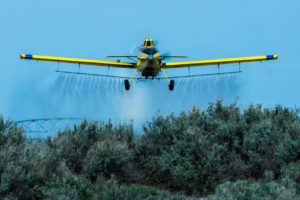
An ethical debate is a bit of a juxtaposition. As we know ethics are a set of moral principles. It is how we understand right from wrong. So how can what is right and what is wrong be up for debate? In Carl Sigel’s post on the “Caring for Creation” section of the Church of the Nativity webpage he discusses the two main types of ethical practices in the agricultural world. Continuing with the use of Robert Zimdahl’s term “productionist ethic” and Aldo Leopold’s term “land ethic” we place in front of us two incredibly distinct approaches to the western agrarian world. How can these two beliefs of right and wrong differ so greatly when talking about the same industry?

One argument I have read in favor of the productionist paradigm and its “ethics” is that with more high-tech input (which the 21st century seems to be quite proud of) comes more output. With more output can come the food justice of ending hunger around the world. Now this comes with the assumption that food distribution is equal and fair. That sounds very ethical at first glance. Unfortunately, however, food is not evenly distributed in our own state let alone the world.

An article published by CNBC in 2013 appropriately named “A hungry world: Lots of food, in too few places” argues that we have 2 to 3 times the amount of food that is needed to feed the global population. On top of food distribution we have the issue of financial means to buy the food.

My question is: Does the ethical argument of the productionist paradigm outweigh the effects of its “high-tech input”? Often the input required to produce large scale farming of the same crop on the same land year after year is devastating to the land and surrounding communities. Fertilizers, pesticides, insecticides and livestock waste (which are often supplemented by antibiotics and hormones) are just a few of the contaminants that can harm the soil, water, and air in and around the farms. In my opinion, no, the pros do not outweigh the cons but maybe there is another ethical advantage of the productionist agriculture that will convince me otherwise. Or maybe not.


Written by Michelle Peedin, NCIPL Program Associate

Michelle was born in Durham and raised in Hillsborough, North Carolina. She continued her education at UNC Chapel Hill where she graduated with a degree in Global Studies with a concentration in Economics, Trade and Development. Identifying as half Peruvian, Michelle’s area of study was Latin America. She was blessed with the opportunity to study in Ireland and volunteer in Costa Rica during her undergraduate time. She continued her journey as a fellow at Student Action with Farmworkers, a non-profit organization in Durham, NC. Michelle is excited to reflect on and empower the communities in NC to push forward for social and environmental justice. She enjoys weekend trips, reading, arts & crafts, and sushi.

Contact Michelle: michelle@ncipl.org

Filed Under: Blog

Pipelines of Solidarity

January 30, 2017 By chris

Last week President Trump signed executive actions to advance the construction of the Keystone, Dakota Access, and Atlantic Coast Pipelines. In the face of clear scientific consensus that our dependence […]

Pipelines of Solidarity

January 30, 2017 by chris

Last week President Trump signed executive actions to advance the construction of the Keystone, Dakota Access, and Atlantic Coast Pipelines.

In the face of clear scientific consensus that our dependence on fossil fuels is jeopardizing our climate and threatening vulnerable communities around the world, it is unconscionable to build more oil pipelines for the benefit of a few wealthy oil companies.

As people of faith we are called to care for future generations. They are depending on us to safeguard their rightful inheritance of a safe and livable planet.

Click below to watch a 3 minute video of NCCC staffer, Susannah Tuttle sharing NC Interfaith Power & Light’s statement opposing the proposed Atlantic Coast Pipeline.

Filed Under: Blog

First 100 Days – Showing How Much We Care

December 1, 2016 By chris

Now, more than ever, we need you to put your faith into action. On January 20th, we inaugurate a new president and begin four years of a new administration. The […]

First 100 Days – Showing How Much We Care

December 1, 2016 by chris

Now, more than ever, we need you to put your faith into action.

pcmOn January 20th, we inaugurate a new president and begin four years of a new administration. The incoming administration has nominated climate deniers and fossil fuel advocates to the cabinet and to the EPA. They have indicated their intention to abandon critical climate solutions like the Clean Power Plan and the historic Paris agreement.

In order to show that faith communities are committed to protecting Creation, Interfaith Power & Light is working with the People’s Climate Movement, Franciscan Action Network, GreenFaith, and others to organize 100 vigils in the first 100 hours of the new administration.

During the first 100 days of the new administration, we want to show overwhelming support for climate action that will create jobs, cleaner air, and a safer future.

On April 29, under the banner of the People’s Climate Movement, people of faith will join partners from environmental, environmental justice and student groups, labor unions, and many others for a major climate mobilization in Washington DC.

Stay in touch to learn how you can get involved – whether you can be in Washington on April 29, or in your own community.

Our hard-won gains on climate change are under attack. The new administration and Congress are threatening, proudly, to undo all our progress and set us back years — years we can’t afford. We need to stand up and take action to protect everything and everyone we love. We need to stand strong in the first 100 hours of the new administration, in the first 100 days, and beyond.

Please join a first 100 days vigil and mark your calendars for April 29th!

Solar Smiles,

Susannah Tuttle, M.Div
Director, NC Interfaith Power & Light

P.S.  Please make a contribution to support NCIPL’s work.

Filed Under: Blog

Power to the Peaceful

November 9, 2016 By chris

Dear NCIPL Leaders, Supporters, & Friends, I wanted to personally reach out to each and every one of you today, to let you know that I am grateful for our […]

Power to the Peaceful

November 9, 2016 by chris

Dear NCIPL Leaders, Supporters, & Friends,

I wanted to personally reach out to each and every one of you today, to let you know that I am grateful for our faithful network and all that we do to make North Carolina a safe, healthy, and wonderous place for all.

My colleague Joelle Novey has offered us these words:

Our prayer right now is to find a rootedness deep in what is good; that we will be like trees planted by the water, fed by Spirit and the ever-present promise of redemption. We pray that we will have the clarity to be fierce warriors for the truth: that every human being is a child of God, not an object, not less than, sacred and beloved and deserving of — requiring our — regard and protection.

As we continue to move forward towards building an inclusive climate adaptation & resilience building movement, we are truly stronger together. We must explain to ourselves and our children that although we do not always understand how the Universe works, we still trust in a love beyond our imaginations. Although we might not always know how to address our challenges & challengers, we must continue to believe in our hope-filled positive visions for the future.

Thank you, for who you are and what you stand for – yesterday, today, and forever more.

Power to the Peaceful,

st-sig


Susannah Tuttle, M.Div
Director, NC Interfaith Power & Light

“This is the end of nothing. This is the beginning of something new and solemn and so important. You must be part of what comes next.” — Neil deGrasse Tyson

Filed Under: Blog

Climate Conference Attendees Range from Duke Energy to NAACP

September 27, 2016 By chris

The young man who sat next to me during a workshop on equity at the Carolinas Climate Resiliency Conference which took place in Charlotte earlier this month was a meteorologist […]

Climate Conference Attendees Range from Duke Energy to NAACP

September 27, 2016 by chris

The young man who sat next to me during a workshop on equity at the Carolinas Climate Resiliency Conference which took place in Charlotte earlier this month was a meteorologist who had been working at Duke Energy for just a couple of years.

Jumping at the too-rare opportunity to have a frank conversation with someone who works for the corporation to which I often find myself in opposition, I asked him his opinion on climate change.

“We talk about 500-year events, 1,000-year events,” he said. “But there have been three of those events this year. I’m finding I’m having to go back and review the projections.”

The workshop began before I had a chance to follow up with a question about energy options, and then I lost him in the scrum at the end of the session. But the fact that he and I had sat at the same table for a time said a lot about how this biennial event, hosted by Carolinas Integrated Sciences and Assessments and co-sponsored by Clean Air Carolina, brings together researchers, industrialists, local government workers, and community advocates in North and South Carolina to prepare for, and put the brakes on, climate change.

Conference speakers ranged from Congressman Bob Inglis, a Republican who lost his job after declaiming the veracity of climate change following a scientific expedition to the Antarctic, to Jacqui Patterson, leader of the NAACP Environmental and Climate Justice Program, who shocked her audience into recalling how, during Hurricane Katrina, prisoners in New Orleans were abandoned in their cells as the water rose up to their chests.

Communicating Shared Goals

We all were working toward the same goal, of course. Rep. Inglis encouraged attendees to invite their Republican family members to visit his website (republicEn.org) and explore a free-enterprise solution to addressing carbon emissions. Reverend Leo Woodberry of South Carolina’s Kingdom Living Temple recounted how, although South Carolina is suing the EPA over the Clean Power Plan, it has a legislative mandate to move forward with a plan anyway, and has been bringing together community members, civic leaders, and industrialists in a series of meetings in the evenings. Susan Joy Hassol of Climate Communications worked on finding an alternative to the phrase “Carbon T—“, an obscenity in conservative circles. WRAL meteorologist Greg Fishel (co-creator of the documentary “Exploring Climate Change“) confessed the moment he realized his ideology was preventing him from evaluating the science around climate change.

East Carolina University’s Christine Avenarius discussed strategies for communicating about storm surge risk to people living in its path (hint, call it a drainage problem, not sea-level rise), and Todd Olinsky-Paul of Clean Energy States Alliance pointed out that, despite all the warnings regarding the unreliability of solar and wind power, the aging US grid breaks down more often than that of any other country, and the breakages are due to severe weather events. The Medical Advocates for Healthy Air presentation advised health care systems to build up resiliency in both infrastructure and staff in order to be able to serve their communities properly, while Nina Hall and Caroline Dougherty of UNC Asheville’s National Environmental Modeling and Analysis Center demonstrated the re-designed U.S. Climate Resilience Toolkit.

Speakers unveiled dozens of tools, websites and strategic programs, such as Clean Air Carolina’scitizen science air monitoring program and the outdoor art exhibit, Particle Falls. With up to six breakout sessions at a time over nearly three days, it was impossible to catch it all. Fortunately, most presentations will be online for further review. But nothing beats the opportunity to sit for a few minutes and chat about climate change with a scientist from Duke Energy.

This post was written by Laura Wenzel, Clean Air Carolina’s Medical Advocates for Healthy Air Manager and was originally posted here.

Filed Under: Blog

  • « Go to Previous Page
  • Page 1
  • Interim pages omitted …
  • Page 9
  • Page 10
  • Page 11
  • Page 12
  • Page 13
  • Interim pages omitted …
  • Page 28
  • Go to Next Page »

Footer

Contact

Eco-Justice Connection
27 Horne St.
Raleigh, NC 27607
(919) 828-6501
info@ncchurches.org

Subscribe

Click here to subscribe to newsletters and blog updates.

  • Facebook
  • Instagram
  • Twitter

Copyright © 2022 Eco-Justice Connection · All Rights Reserved · Website by Tomatillo Design