• Skip to primary navigation
  • Skip to main content
  • Skip to footer
Eco-Justice Connection

Eco-Justice Connection

An initiative of the North Carolina Council of Churches

Get Involved Donate
  • About
    • Mission / Goals
    • Partnerships & Collaboratives
    • History / Timeline
  • Voices
  • Initiatives
    • Faithful Advocacy
    • Climate & Energy
    • Environmental Justice
    • Local to Global
    • Climate & Health
    • Resiliency and Restoration
  • Resources
  • NCCC

Search Eco-Justice Connection

Uncategorized

New Tax Law Will Harm Environment

January 5, 2018 By chris

The final version of the tax bill, passed in late December, will now open the pristine Arctic National Wildlife Refuge (ANWR) to oil drilling while maintaining a 14% cut in […]

New Tax Law Will Harm Environment

January 5, 2018 by chris

The final version of the tax bill, passed in late December, will now open the pristine Arctic National Wildlife Refuge (ANWR) to oil drilling while maintaining a 14% cut in the corporate tax rate. This will allow oil and gas companies to gain an additional $1 billion in profits. In addition, oil and gas companies were granted an increased ability to write-off new equipment expenditures.

Republicans had to find ways to pay for their corporate tax cuts, which could cost up to $1.5 trillion. Alaska’s Republican Senator Lisa Murkowski stipulated she would vote yes for the tax bill only if oil drilling in the Arctic National Wildlife Refuge was included.

ANWR spans 19.6 million acres and is home to over 200,000 caribou and polar bears and millions of migratory birds. In the final version of the tax bill, drilling along the ANWR coastal plain will now be leased, a decision that the majority of Americans oppose.  Even with the envisioned two lease sales of 400,000 acres each within the next decade, the potential sales would offset less than one-tenth of one percent of the total tax cut.

Finally, a provision in the Senate bill called the Base Erosion Anti-Abuse Tax, or BEAT, is a provision that targets companies that lower their tax bill through cross-border investments.

In other words, most U.S. renewable energy developers do not have enough taxable income to take advantage of the federal investment tax credit. Therefore they rely on investment from larger global renewable energy investors who have been the core financing tool for solar and wind projects in the United States. This type of investment makes up 50 to 60 percent of the funds for an average wind farm and 40 to 50 percent of funds for the average solar project. This investment, called tax equity, is attractive to global investors because it lowers their tax bill by taking advantage of the renewable tax credits.

Now, however, the BEAT provision would require these global investors to potentially pay much higher taxes on their US-based projects, making it unattractive to invest in renewable. Thus far the analysis of the BEAT provision says that the investors would have to include cross-border income and pay taxes on it before applying the tax credits. Sources say that the investors are not sure exactly how detrimental BEAT will be to their renewable investments but until we know more, solar and wind projects will see a shortage in investors.

But the tax bill could have been much worse for the environmental sector. Earlier versions of the bill included proposed slashes to wind and solar tax credits which would have directly impacted the renewables industry even more.

The electric car industry is also relieved that a debilitating setback the House proposed in their version of the bill was left out of the final version. It would have eliminated the $7,500 tax credit for consumers who purchase electric vehicles.

As the tax law is studied in the months to come, we will know more about the impact it will have on the renewable energy sector. Until then continue contacting your elected officials to let them know what is important to you. Let them know that we oppose oil drilling in the Arctic National Wildlife Refuge and we want to see further investment opportunities for renewable energy projects.
Filed Under: Blog, Uncategorized

NCIPL Testifies at EPA Hearing on Clean Power Plan

December 7, 2017 By chris

Last week North Carolina Interfaith Power & Light spoke at the EPA public hearing in Charleston, West Virginia, on the proposed repeal of the Clean Power Plan.  EPA has proposed that […]

NCIPL Testifies at EPA Hearing on Clean Power Plan

December 7, 2017 by chris

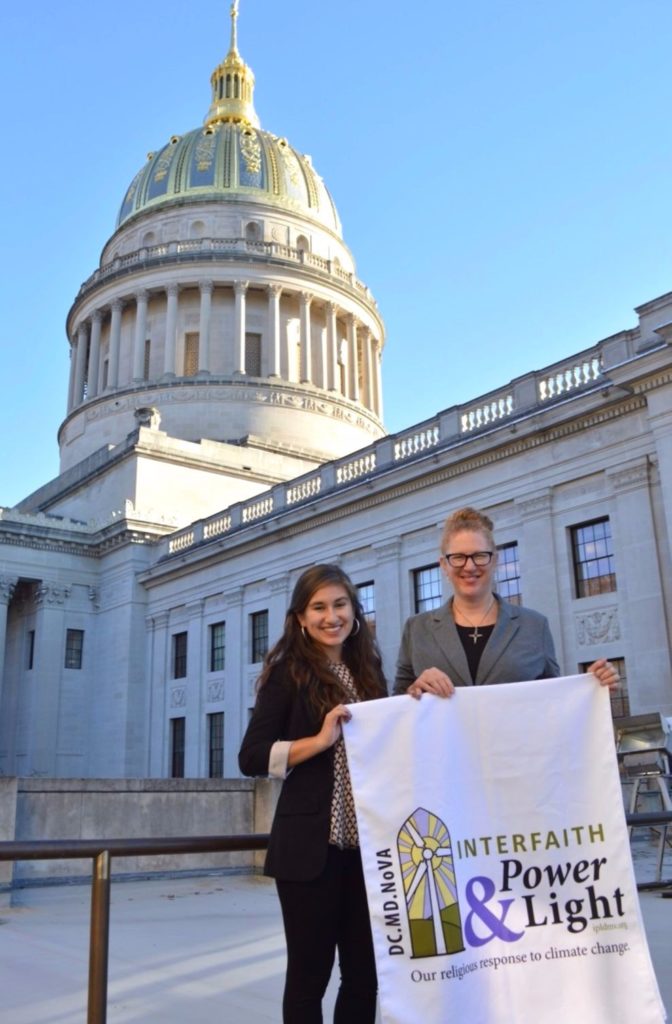
Last week North Carolina Interfaith Power & Light spoke at the EPA public hearing in Charleston, West Virginia, on the proposed repeal of the Clean Power Plan.  EPA has proposed that the Clean Power Plan is not consistent with the Clean Air Act.

The EPA held the public hearing on this critical issue in the heart of coal country. Faith leaders, including those from West Virginia Interfaith Power & Light, spoke in support of the Clean Power Plan because it sets flexible and achievable limits on otherwise unlimited dumping of carbon pollution from power plants into our air and it encourages the development of clean, renewable energy.

Susannah Tuttle, Director of NCIPL, was at the hearing last week. She testified, in part:

It should be expected that our elected officials and the EPA act on our moral obligation to address unlimited carbon pollution coming from the nation’s power plants, the single largest source of global warming pollution in the country. The standards laid out by the Clean Power Plan will help usher in clean energy solutions like improved efficiency and solar power: things that North Carolina Interfaith Power & Light congregations have been using in their facilities for years to reduce emissions and save money. Emerging wind and solar companies have been in a David and Goliath struggle against the well-funded coal and gas industries.  The Clean Power Plan helps create a dynamic move toward cleaner energy.

Michelle Peedin, Program Associate for NCIPL, was also at the hearing. She testified:

This friday I will be 24 years old. So when we take a look at these projections for 30 or 50 years out, God willing, I will be here.  I will be alive after many of the current members of legislature will have passed. I will be alive after many of the current policies will have been put in place for decades. My generation and our families will be living and breathing the repercussions of today’s decisions. That is why I made the decision a year ago to work towards addressing the ecological and justice issues of climate change as a faith-based initiative through NCIPL. Because, like a quote I embodied many years ago, “if not now, when? If not me, who?”

Others spoke up as well. 72-year-old Stanley Sturgill, who mined coal for decades in Kentucky and now has black lung disease said:

“Our health, environment and global climate are actively being destroyed. And it is clear to me that EPA Administrator Scott Pruitt and President Trump are accelerating and cheering on the damage. I have come here today to ask you to stop. For the sake of my grandchildren and yours, I call on you to strengthen, not repeal, the Clean Power Plan. We are still literally dying for you to help us.”

There is a comment period now and people of faith need to speak up and be counted:

Please speak up! Click here to send a message to the EPA that you oppose any repeal or weakening of the Clean Power Plan.

The EPA announced today that they will hold three additional public hearings on a proposal to withdraw the Clean Power Plan, in San Francisco; Gillette, Wyoming; and Kansas City, Missouri.

EPA Administrator Scott Pruitt in a press release said the change was “due to the overwhelming response” to two days of hearings in West Virginia last week.

People of faith have a moral obligation to care for and protect our children and future generations by addressing the effects of climate change and carbon pollution, especially as they wreak havoc on the poorest and most vulnerable among us. Let’s make the right and moral choice to implement sensible climate solutions that speed the transition to a just and equitable clean energy economy.

Filed Under: Blog, Uncategorized

Help us meet our matching grant!

November 28, 2017 By chris

As people of faith we have an increasingly important role to play in bringing together diverse voices to speak on behalf of those whose voices are not heard - the most vulnerable in our society, including children and future generations. Join us by making a tax-deductible donation to NCIPL - every gift made will be matched up to $13,500. Please give today!

Help us meet our matching grant!

November 28, 2017 by chris


CLICK HERE to make a secure, tax-deductible donation to NCIPL. Every Gift will be matched through Interfaith Power & Light’s state affiliate grants program up to $15,000.

We prepare for the future with anticipation knowing that our leadership in developing hope-filled, positive responses to climate change supports the health of our ecosystems and nurtures reverence toward our sacred and interconnected Earth community.

Prayers for Peace & Healing,


NCIPL is a fiscally autonomous program and operates entirely by restricted funds. NC Council of Churches 501c3 Federal ID number is used on IRS tax donation receipts. PLEASE DONATE TODAY!

Filed Under: Blog, Uncategorized

Reject the Tax Plan: Don’t Sacrifice Creation for Big Business

November 28, 2017 By chris

In order to deliver huge tax breaks to corporations and wealthy individuals, this package would slash tax credits for renewable energy, pull the plug on electric cars, and open the pristine Alaska National Wildlife Refuge to oil drilling.

Reject the Tax Plan: Don’t Sacrifice Creation for Big Business

November 28, 2017 by chris

On Thursday, the House passed an irresponsible, unethical, and environmentally devastating tax bill. Now we must stop it in the Senate.
In order to deliver huge tax breaks to corporations and wealthy individuals, this package would slash tax credits for renewable energy, pull the plug on electric cars, and open the pristine Alaska National Wildlife Refuge to oil drilling. All while maintaining $15 billion in subsidies for the fossil fuel industry. 

Speak out against this immoral tax plan.

This tax plan is moving fast – and that’s by design. Polling shows that a majority of voters oppose these unfair tax breaks, including a majority of Republicans. So their only chance of getting it through is to pass it quickly with minimal hearings and little attention. The 400-page House bill passed in record time, with NO hearings and over the objections of Democrats and some Republicans.

Please, urge your senator to oppose this devastating tax bill.

Cutting tax credits for renewable energy could slow or even reverse the extraordinary momentum we have been seeing in the adoption of renewable energy in the past few years. You, and thousands of other people of faith called congressional offices, mailed postcards, sent emails and visited elected officials to make those credits law – we can’t lose them now, just when they are starting to get results.

We can’t let this bill pass. God’s Creation and our children’s future are too important.

Click here to send a message to your senators that you oppose this tax plan that does not reflect our country’s morals or values.

We need to make sure our senators know that people of faith DO NOT support a tax bill that ignores the threat of global warming, threatens our sacred Alaska wilderness, and costs lives.

Filed Under: Blog, Uncategorized

Big Biomass is a Moral Injustice – Stop Enviva

July 19, 2017 By chris

Over 10,000 individuals and 50 organizations, representing millions of people, supporting communities, public health, climate and forests asked Governor Cooper to revoke the world’s largest wood pellet manufacturer’s flawed air […]

Big Biomass is a Moral Injustice – Stop Enviva

July 19, 2017 by chris

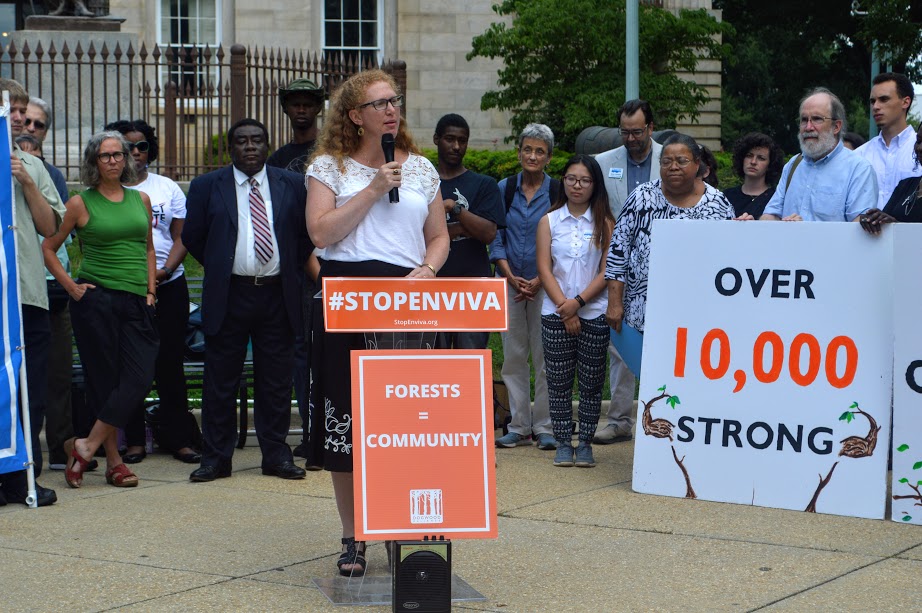
Over 10,000 individuals and 50 organizations, representing millions of people, supporting communities, public health, climate and forests asked Governor Cooper to revoke the world’s largest wood pellet manufacturer’s flawed air quality permit in Richmond County on Tuesday. The Raleigh press conference included 5 speakers from prominent NC organizations such as Dogwood Alliance, Concerned Citizens of Richmond County, and Clean Air Carolina. Susannah Tuttle of NC Interfaith Power& Light was among the speakers. Her press statement was as follows:
My name is Susannah Tuttle and I serve as the Director of NC Interfaith Power & Light, a program of the NC Council of Churches, representing 18 denominations and nearly one and a half million North Carolinians. We are called to be stewards, but are giving away our resources. Our faith calls upon us to stand with the people of Richmond County in their fight for clean air and healthy community. I hope that Governor Cooper can hear our call to stand with North Carolina communities, and put people above climate polluting industries like Enviva. Faithful Christians believe that God will redeem both people and nature in the new heaven and earth. Knowing that God intends one day to redeem nature should motivate Christians to view and act differently towards the environment. Christians should also be involved as much as possible in the process of redeeming nature here and now on earth as an expression of our own redemption and salvation and the “living out” of our faith. (Phil. 2:12-13; Jas. 2:14-25) In the case of a Christian forester or ecologist, for example, being involved in the restoration of a healthy forest ecosystem is consistent with and honors God’s ultimate plan for redeeming nature. In contrast, being responsible for widespread and complete destruction of a particular forest ecosystem does not seem consistent with nor does it honor God’s plan for redeeming nature.“Let the heavens rejoice, let the earth be glad, let the sea resound and all that is in it. Let the fields be jubilant, and everything in them. Let all the trees of the forest sing for joy. Let all creation rejoice before the Lord, for he comes, he comes to judge the earth. He will judge the world in righteousness and the peoples in his faithfulness.” (Psalm 96: 11-13)

The organizations contend that biomass and the wood pellet industry are an environmental injustice. Nowhere is this more clearly seen than Richmond County in rural North Carolina. For the last several years county officials have been working, mostly behind closed doors, with Enviva to gain approval for the construction of a wood pellet manufacturing facility in the town of Hamlet. Residents of the county have repeatedly attempted to deliver public comments to their elected officials at the Richmond County Commission, and have been denied on multiple occasions in a practice that NC Policy Watch reports “clearly violates the first amendment.”

“North Carolina forests do their job to clean the air when they are a living part of our environment”, said Terry Landsdell, Program Director at Clean Air Carolina. “From production to combustion, wood pellet chain emissions are higher than coal, release large quantities of respiratory pollutants and release levels of particulate matter that disproportionately affect residents already overburdened with health impacts like asthma and COPD from air pollution exposure.

Filed Under: Blog, Uncategorized

Church of the Nativity, Raleigh Awarded $10,000 Grant

July 19, 2017 By chris

The Episcopal Church recently announced the awarding of 16 grants totaling $123,910 in the second round of grantmaking managed by the Advisory Council for the Stewardship of Creation and approved […]

Church of the Nativity, Raleigh Awarded $10,000 Grant

July 19, 2017 by chris

The Episcopal Church recently announced the awarding of 16 grants totaling $123,910 in the second round of grantmaking managed by the Advisory Council for the Stewardship of Creation and approved by the Executive Council.

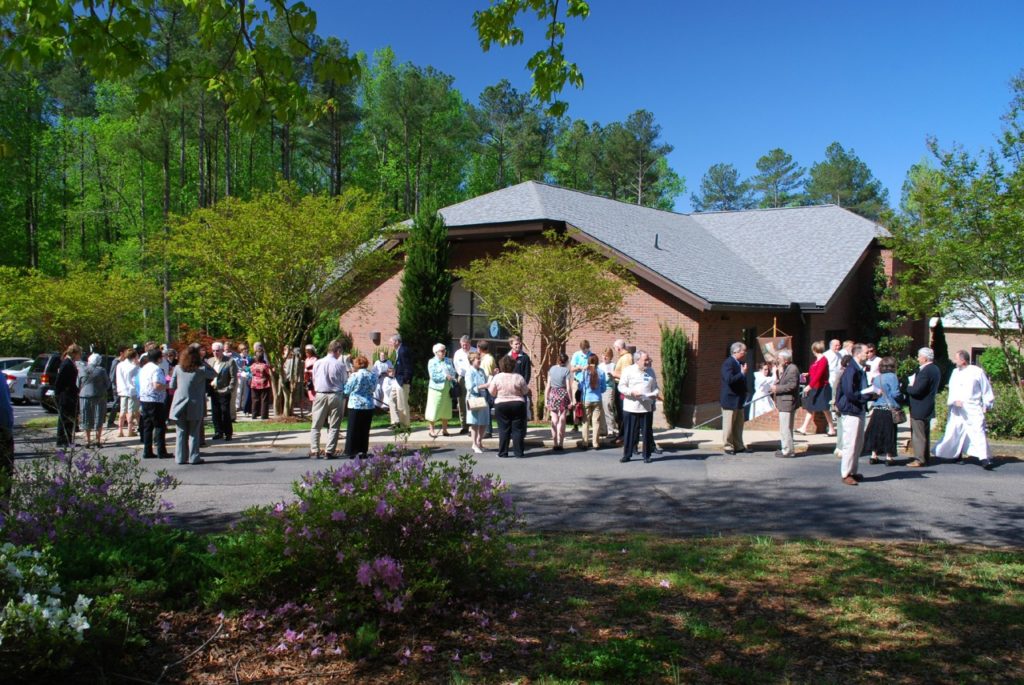
Among the recipients is Nativity, Raleigh, awarded $10,000 toward its work, Becoming the Good Soil, of reducing the serious effects of climate change by engaging in regenerative agriculture through carbon farming, specifically by supplementing land with compost. In simple terms, one goal of carbon farming is to increase soil organic matter (SOM) to help draw carbon out of the atmosphere and sequester it in the ground.

In addition to the implementation of carbon farming to local soil, Nativity will work to help educate individuals and congregations learn more about regenerative agriculture through, among other channels, the development of a white paper to be made available to all churches.

From Nativity:

“Caring for Creation has deep roots in our spiritual lives at Church of the Nativity, and for many years we have supported and been a local voice for North Carolina Interfaith Power & Light (NCIPL) in seeking hopeful solutions for climate change. To avoid severe climate change, reducing emissions from burning fossil fuels will not be enough. Carbon must also be withdrawn from the atmosphere and sequestered into the soil.”

Nativity’s four main goals are 1) educating and encouraging individuals and churches in the Episcopal Diocese of NC to make compost from organic waste, 2) building a statewide organization of the primary stakeholders within government, the private sector, and the farming and academic communities with the goal of launching large scale carbon farming in NC, 3) planning and hosting a NC Carbon Farming Summit meeting that will produce a comprehensive strategy for the project, and 4) publishing a white paper that will summarize the rationale and strategy for the project. 

Join us in congratulating Church of the Nativity and all the hard working individuals seeing this through!

For more information visit http://nativityonline.org/

Filed Under: Blog, Uncategorized

  • « Go to Previous Page
  • Page 1
  • Interim pages omitted …
  • Page 5
  • Page 6
  • Page 7
  • Page 8
  • Page 9
  • Interim pages omitted …
  • Page 16
  • Go to Next Page »

Footer

Contact

Eco-Justice Connection
27 Horne St.
Raleigh, NC 27607
(919) 828-6501
info@ncchurches.org

Subscribe

Click here to subscribe to newsletters and blog updates.

  • Facebook
  • Instagram
  • Twitter

Copyright © 2022 Eco-Justice Connection · All Rights Reserved · Website by Tomatillo Design